Cor van Steijn · software developer & architect

AI on your own platform — secure, auditable, and under your control.

I join systems that need each other, where mistakes cost money, safety or trust. AI is the newest of them: it works with your real data, while access, privacy and audit stay in order.

your peopleyour systems

25+

years of experience

Defence · Oil & gas · Finance · ESG

where mistakes have real consequences

NL · EU · US

teams I work with, remote and on-site

Two sides, one line

Work

Every project had two sides that needed each other but could not talk to each other yet. I built the line between them.

AI / MCP

2024–present · Enterprise SaaS

Secure AI on an Enterprise Data Platform

AI assistantsThe platform people already work in

The line I builtOne secure AI layer with per-customer access

A data platform for regulated industries wanted AI its customers could trust. Now one secure AI layer powers both the built-in assistant and tools like Claude — and each customer decides what AI may see and do.

Read the full story

Challenge

A data integration platform for regulated industries wanted its users to work with AI: ask questions, set up integrations, and fix problems by talking to an assistant. But its customers handle sensitive compliance data, and they asked hard questions: can the AI do more than I'm allowed to? Can we keep AI away from our data? The early AI tools also lived apart from the platform, so every change had to be made twice.

Approach

Together with the team, we brought all AI tools into the platform itself, so the built-in assistant and outside AI clients like Claude and VS Code use exactly the same tools. That gives one place to secure, test, and audit everything AI can do.

The AI always acts as the signed-in user, through the same permission checks, so it can never do more than that person. Each customer can switch AI write access and AI access to their data on or off.

We also made AI a step in automated workflows: reading PDFs and images, and producing finished PDF reports.

Result

Customers in regulated industries can use AI on the platform with confidence: it stays within each user's rights, and access to their data is their own choice. For the platform team, a new AI capability is built once and works everywhere.
MCPC#.NETOAuth 2.1Azure ADClaude APITypeScript

Data Integration

2024–present · ESG / Enterprise SaaS

Enterprise Data Integration & ESG Compliance

Dozens of business systemsOne clear compliance picture

The line I builtConnectors and schema mapping

Evolving an early-stage data integration startup into an enterprise-grade platform — from core architecture and new product capabilities to production infrastructure and a growing connector ecosystem.

Read the full story

Challenge

An early-stage SaaS startup had built a promising data integration platform for ESG and EHSQ compliance automation, but needed to mature it for enterprise clients. The architecture had accumulated complexity from rapid early development — intermediate data representations, a legacy code generation framework, and concerns that had grown tangled. Beyond cleanup, the platform needed entirely new capabilities: schema mapping, operational monitoring, incident management, and a much larger connector ecosystem to serve regulated industries.

Approach

Together with the team, we're evolving the platform across multiple fronts simultaneously. On the architecture side, we simplified the data pipeline by eliminating intermediate types, removing unnecessary serialization, and separating settings from schema fields. The legacy code generation framework was systematically replaced.

We built new platform capabilities from scratch: a schema mapping engine for data transformations between systems, operational dashboards for monitoring connector health, an incident management system for tracking and resolving integration failures, and a notification framework. The deployment infrastructure moved to infrastructure-as-code with Pulumi.

The connector ecosystem expanded significantly — regulatory compliance integrations, ERP systems, safety inspection platforms, carbon accounting, HR/payroll, workforce compliance, and a generic HTTP connector that lets clients integrate with any REST API without custom development.

More recently, a key data vendor retired its legacy XML services while customer systems still depended on them. We built a compatibility layer that serves the old formats on top of the vendor's new API, so those systems need no changes on their side. Tests against real responses from the old service prove the output matches.

We also added an audit trail that shows who changed what, and replaced permanent admin rights with time-limited access.

Result

The platform has matured from an early-stage product to an enterprise-ready system serving regulated industries. New capabilities like schema mapping, incident management, and operational monitoring give clients the tools they need for production workloads. The connector ecosystem continues to grow, and the architecture supports the pace of a fast-moving startup.

C#.NETASP.NET CorePostgreSQLEvent SourcingMassTransitPlugin ArchitectureOpenAPIPulumiAzure

AI-Assisted Development

2025–present · Enterprise SaaS

Building Software with AI Coding Agents

AI coding agentsA team's way of working

The line I builtShared skills, rules and written decisions

A way of working where AI coding agents do much of the typing, while tests, reviews, and written decisions keep the quality high — set up for the whole team, not just one developer.

Read the full story

Challenge

AI coding agents write a lot of code fast, but out of the box they forget team conventions, repeat old mistakes, and sometimes undo choices that were made on purpose. Every session also starts from zero, and long instructions cost time and money. A small product team wanted the speed without losing quality or control.

Approach

We turned the team's knowledge into something AI agents can use: shared skills for the daily work, coding rules, and written architecture decisions that people and agents both follow. When an agent gets something wrong, the lesson is captured once, so it doesn't happen again.

On top of that, I use my own way of working with several AI agents at once, each with its own role — from design to review to delivery. I'm happy to show how it works in a conversation.

Result

A small team gets more done without cutting corners: in just over six months, I delivered new AI features, a move of the entire data layer, and a legacy API migration — with tests and code reviews fully in place. The shared skills and rules became the team's standard way of working with AI agents.

Claude CodeAgent SkillsMCPTDD

Fintech

2022–2024 · Financial Services

Fintech Lending Platform

A new lending productBanks, notaries and accounting

The line I builtPayments, accounting and documents for real money

The financial operations backend for a regulated Dutch mortgage lender — from loan origination and payment orchestration to automated accounting and European compliance documents.

Read the full story

Challenge

A Dutch fintech needed the complete financial backbone for a mortgage equity product — regulated by the AFM. This meant loan origination with complex financial calculations, payment processing through multiple banking providers, automated accounting, European-standard document generation, and CRM synchronization. Everything needed to handle real money with zero tolerance for calculation errors.

Approach

Over two years our team built the financial operations platform from the ground up. The loan domain uses event sourcing: loan aggregates with state machine transitions, separate loan part tracking, and optimistic concurrency control.

For payments, we integrated two Dutch banking providers with certificate-based mutual TLS authentication, designed a generic payment provider abstraction, and implemented SEPA Direct Debit. Three standalone banking SDKs were developed in parallel to support this.

The accounting automation posts GL transactions automatically with duplicate prevention. For documents, the team built generation of ESIS documents, binding offers, rejection letters, annual statements, and brand-specific variants. We also delivered the back-office system with role-based access and bidirectional synchronization across all platforms.

Result

A complete, regulated financial operations platform handling real mortgage equity products. Payment orchestration across two banking providers. Automated accounting without manual intervention. European-compliant document generation for the full loan lifecycle.

TypeScriptGraphQL.NET/C#Event SourcingPostgreSQLAWSSEPAHandlebars

Process Safety

2018–2022 · Oil & Gas

Safety-Critical Process Management

Sensors in the fieldPeople who must know when a barrier fails

The line I builtBarrier monitoring that never goes offline

A process safety risk analysis system built from greenfield to production — event-sourced barrier monitoring for oil & gas plants that can never go offline.

Read the full story

Challenge

Oil and gas plants need to continuously monitor whether their safety barriers are working — when barriers degrade, the consequences can be catastrophic. The challenge was building a system that ingests real-time sensor data, evaluates it against barrier configurations modeled as safety barrier diagrams, and produces health assessments that operations teams can act on. The system had to run 24/7, support deployments that operate independently when connectivity is lost, and evolve without breaking configurations across dozens of sites.

Approach

Our team took a greenfield project to production over 3.5 years. The pivotal architectural decision was event sourcing — projecting risk data from event streams into SQL tables. This gave us full configuration history for safety audits, schema evolution with up-converters, and the foundation for multi-deployment synchronization.

We built health calculations at every level (data point, barrier, location, site, region) with escalation logic that distinguishes isolated sensor failures from systematic barrier degradation. The team developed virtual data points, stale-feed detection, and Excel import/export for plant operators. One of the final milestones was enabling blue-green deployments — because these plants can never go offline.

Result

The system evolved from a simple risk-scoring API into a sophisticated event-sourced platform with DDD aggregates, multi-deployment synchronization, virtual data points, and zero-downtime deployment capabilities. The architecture survived continuous evolution over 3.5 years without breaking existing plant configurations.

C#.NET CoreSQL ServerSqlStreamStoreEvent SourcingDDDFluentMigratorIdentityServer

Defence

2001–2006 · Defence & Security Research

Intelligence Analysis Platforms

Intelligence analystsThe data they must make sense of

The line I builtAnalysis platforms

Prototype intelligence systems for defence research: text mining, data mining, social network analysis and maps, so analysts could find patterns in large amounts of data.

Why a stone?

I bring the stone. You bring the rest.

Van Steijn means “from the stone”. In the old tale of stone soup, a traveler comes to a village with only a pot and a stone. Each villager adds what they have, and together they make a meal none of them had alone.

  1. 01

    I bring the stone

    A first working piece, early on. Something real to react to, instead of a long plan.

  2. 02

    You add what you have

    Your knowledge of the business, your systems and your ideas. Your team builds with me, not around me.

  3. 03

    It keeps working when I leave

    Tests, written decisions and code that is simpler than when I arrived. Your team owns what we built.

Services

I work with SMEs, scale-ups, and international teams — especially those adding AI to a platform their customers already rely on.

AI on Your Platform

AI assistants and agents that work with your platform's real data and processes, with access, privacy, and audit designed in from the start

Software Architecture

Design and review of software architectures with focus on scalability, maintainability, and getting the structure right from the start

Backend & Full-Stack Development

Building reliable systems with .NET, TypeScript, React, and SQL — from greenfield to modernization

Cloud & DevOps

AWS and Azure infrastructure, containerization, CI/CD pipelines, and infrastructure as code with Pulumi

System Integration

Connecting systems that weren't designed to talk to each other — APIs, connectors, data pipelines, and protocol bridges

Technical Leadership

Coaching teams, setting coding standards, introducing AI-assisted development, and making architectural decisions that hold up over time

About

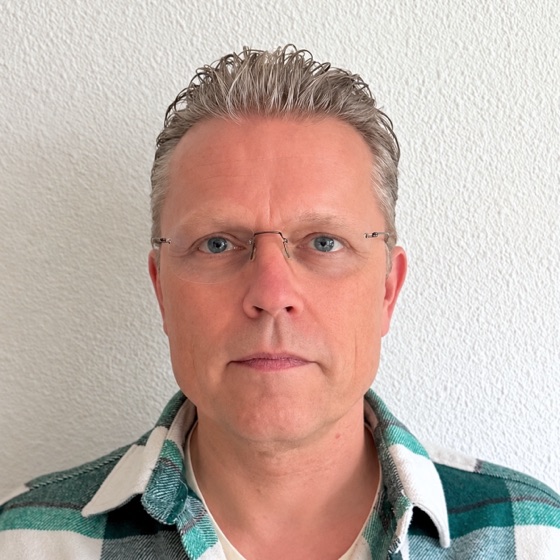
Cor van Steijn

I'm Cor van Steijn, a software developer and architect with over 25 years of experience. I help companies add AI to the software they already run: assistants and agents that work with your real data and processes, while access, privacy, and audit stay in order. That matters most where mistakes have real consequences — and that's where I've spent my career: intelligence systems for defence, safety systems for oil & gas plants, regulated financial infrastructure for mortgage lenders, and compliance data for enterprises.

I work as an independent contractor from the Netherlands, collaborating with teams across Europe and the US. I care about getting the architecture right, writing code that's simpler when I leave than when I arrived, and solving problems that matter to the people who use the software.

Contact

Let's talk

Two sides that need to work together? Let's start with a free, no-obligation conversation about your systems, your plans, and whether I'm the right fit. I usually reply within one working day.

Email

cor@vansteijn.dev

Location

Netherlands (Remote & On-site)